




We Have Fully Solved the PFAS Challenge: The Future of Sustainable Textiles Starts at the Source
For decades, PFAS-based chemistry helped the textile industry achieve what once seemed impossible: * Durable water repellency * Oil resistance * Stain protection * Long-lasting outdoor performance
Julia W
5/7/20265 min read

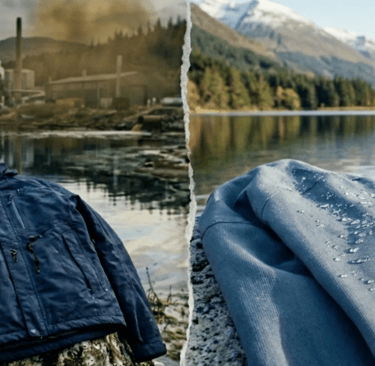
But today, the same technology that built modern functional apparel is becoming one of the industry’s biggest environmental and regulatory challenges.
Across global markets, apparel brands are now facing increasing pressure from:
Government regulations
Restricted substance lists (RSL/MRSL)
Retail compliance standards
Consumer environmental awareness
The question is no longer:
“Should we reduce PFAS?”
The real question is:
“How fast can the industry transition to fully PFAS-free textile systems without sacrificing product reliability?”
At YL Textile, we believe the transition is no longer theoretical.
We are now fully capable of delivering PFAS-free functional fabric solutions that meet modern apparel performance standards while supporting international third-party testing and compliance requirements.
This article explains how the industry arrived here—and how the next generation of functional textiles is being rebuilt from molecular design to supply-chain transparency.
Part 1 — Tracing the Source: Why PFAS Exists in Textile Fabrics
Before discussing solutions, the industry must first understand why PFAS became so deeply embedded in functional textiles.
Why PFAS Was Widely Used
PFAS (Per- and Polyfluoroalkyl Substances) became popular because fluorinated chemistry provides an extremely low surface energy.
In practical textile applications, this means:
Water beads off easily
Oil struggles to penetrate the surface
Dirt and stains become easier to remove
This created the famous “three-proof” performance:
Water repellent
Oil repellent
Stain resistant
For decades, this chemistry dominated:
Outdoor apparel
Skiwear
Military textiles
Workwear
Performance sportswear
The Hidden Pollution Pathway
Most consumers assume PFAS pollution only occurs when garments are worn or discarded.
In reality, contamination begins much earlier.
PFAS pollution can occur during:
Synthetic fiber polymerization
Textile finishing processes
Drip-dry treatments
Chemical manufacturing wastewater discharge
Once released, PFAS compounds enter:
Groundwater systems
Rivers and oceans
Agricultural soil
Food chains
This is why scientists often call PFAS:
“Forever chemicals.”
Because the carbon-fluorine (C–F) bond is one of the strongest molecular bonds in chemistry.
A simple way to understand it:
It behaves like a “diamond lock” in the chemical world—extremely difficult to break down naturally.
The Misconception of Short-Chain PFAS
For years, the industry believed:
C8 PFAS (long-chain) = dangerous
C6 PFAS (short-chain) = safer alternative
However, newer environmental studies have shown that:
C6 compounds also exhibit environmental persistence
They still accumulate in ecosystems
They remain difficult to degrade naturally
This means the real long-term solution is not:
“Switching from C8 to C6.”
The real solution is:
100% PFAS-Free textile systems.
Part 2 — Technology Breakthroughs: Replacing Fluorinated Chemistry
The biggest challenge is clear:
How do we replace the traditional fluorinated protective layer while maintaining textile performance?
Today, the industry is entering a new phase of material innovation.
1. Non-Fluorinated Durable Water Repellents (Zero-F DWR)
Silicone-Based Solutions
Silicone technologies provide:
Soft handfeel
Good water repellency
Excellent flexibility
However:
Oil repellency is limited
Performance differs from fluorinated systems
These are increasingly used in:
Urban outerwear
Lightweight functional apparel
Hydrocarbon / Wax-Based Technologies
Inspired by natural plant wax layers, these systems create:
Everyday water resistance
More biodegradable surface chemistry
Lower environmental impact
Advantages:
Cost-effective
Suitable for commercial apparel collections
Applications include:
Casual jackets
Lifestyle apparel
Eco-focused fashion products
Polyurethane-Based Protective Systems
Polyurethane technologies are now evolving beyond traditional coatings.
Modern PU systems can deliver:
Water resistance
Abrasion durability
Flexible performance layers
Without relying on fluorinated chemistry.
Part 3 — Biomimicry & Nature-Inspired Textile Engineering
The future of sustainable textiles is no longer purely chemical.
It is increasingly:
Structural
Biological
Physical
Plant-Based Molecular Design
Researchers are developing biodegradable fatty-acid structures derived from:
Plant oils
Renewable biomass
Bio-based polymer systems
The goal:
Reduce environmental persistence
Maintain functional repellency
The Lotus Effect: Hydrophobicity Without Fluorine
One of the most promising approaches comes directly from nature.
Lotus leaves naturally repel water because of their microscopic nano-structured surfaces.
Instead of relying on chemical coatings, engineers recreate:
Nano-scale surface roughness
Controlled fiber geometry
Air-pocket structures
This creates hydrophobic behavior through physics—not fluorinated chemistry.
Part 4 — Reducing PFAS Through Fabric Engineering & Design Logic
The industry must also rethink a deeper question:
Do all garments really require extreme chemical performance?
“Fit-for-Purpose” Product Development
For example:
Does an urban commuter jacket truly require industrial-grade oil repellency?
Probably not.
For years, the industry over-engineered apparel performance specifications.
This created:
Unnecessary chemical loading
Higher environmental impact
Excessive functional redundancy
The future is smarter design:
Matching realistic performance requirements with actual end use.
Plasma Treatment Technology
Plasma treatment is emerging as one of the most important dry-process innovations.
Instead of liquid chemical baths, plasma modifies fiber surfaces using ionized gas energy.
Advantages include:
Reduced chemical consumption
Lower wastewater generation
Improved surface functionality
This technology significantly reduces dependency on traditional fluorinated finishing systems.
Mechanical Water Resistance Through Fabric Construction
Not all water resistance requires chemistry.
High-density woven structures can naturally improve:
Water resistance
Wind resistance
Surface stability
Examples include:
High-density cotton weaving
Compact nylon constructions
Ultra-tight microfiber structures
This physical barrier approach reduces the need for aggressive chemical finishing.
Part 5 — Supply Chain Transparency Is the Real Battlefield
One of the biggest challenges in PFAS elimination is invisible contamination.
Many PFAS compounds enter production indirectly through:
Processing aids
Lubricants
Mold release agents
Auxiliary chemicals
This makes source-level control extremely difficult.
RSL & MRSL Compliance Management
Leading apparel brands are now implementing:
RSL (Restricted Substances Lists)
MRSL (Manufacturing Restricted Substances Lists)
Programs such as:
ZDHC standards
REACH regulations
California PFAS restrictions
are rapidly reshaping global sourcing requirements.
Full Raw Material Traceability
True PFAS-free management requires visibility across:
Chemical suppliers
Fiber manufacturers
Dyeing mills
Finishing factories
Without traceability, hidden contamination risks remain.
Third-Party Certification Systems
Today, global brands increasingly require certifications such as:
OEKO-TEX® Standard 100
bluesign®
ZDHC compliance verification
These systems are becoming baseline entry requirements for international supply chains.
Part 6 — Regulation & Consumer Awareness Are Accelerating the Shift
The transition away from PFAS is no longer optional.
It is becoming a survival requirement.
Regulatory Pressure Is Increasing Worldwide
Governments are rapidly tightening restrictions.
Examples include:
EU REACH PFAS restriction roadmap
California PFAS legislation
Increasing global wastewater discharge standards
This means brands that fail to transition may face:
Compliance risk
Retail restrictions
Market access limitations
Consumers Are Also Changing
Modern consumers increasingly understand:
Environmental toxicity
Bioaccumulation risks
Water contamination impact
Many are now willing to accept:
Slightly lower oil repellency
in exchange for:
Safer ecosystems
Cleaner water systems
Reduced long-term environmental harm
Conclusion — From “Forever Chemicals” to Regenerative Textile Systems
Solving the PFAS problem is more than a chemical replacement project.
It represents a complete paradigm shift in textile engineering.
The industry is moving from:
“Maximum chemical performance”
toward:
“Balanced, safer, and sustainable performance.”
This transition requires:
New chemistry
New manufacturing systems
New supply-chain transparency
New product development logic
Most importantly:
It requires textile partners who are already prepared for the future.
YL Textile PFAS-Free Solution Capability
At YL Textile, we have already fully established PFAS-free functional fabric development systems.
Our capabilities include:
Zero-fluorine DWR solutions
PFAS-free functional finishing systems
High-density physical water-repellent woven fabrics
Sustainable coating and lamination technologies
Supply-chain chemical management support
We also support:
International third-party testing
OEKO-TEX® related compliance requirements
RSL / MRSL management systems
Export-market performance verification
Our goal is not simply to replace PFAS.
Our goal is to help apparel brands build:
Next-generation sustainable functional textiles without compromising product reliability.
Explore More
Learn more about our fabric development capabilities:
https://www.yl-fabric.com/
Read our functional textile insights:
https://www.yl-fabric.com/fabric-trends-for-apparel-brands-in-2026
FAQ (For Apparel Brands & Product Developers)
1. What are PFAS in textiles?
PFAS are fluorinated chemicals used to provide water, oil, and stain resistance in fabrics.
2. Why are PFAS being restricted globally?
Because they are highly persistent, difficult to degrade, and can accumulate in ecosystems and human bodies.
3. Can PFAS-free fabrics still achieve waterproof performance?
Yes. Modern PFAS-free technologies can provide strong water repellency through alternative chemistry and fabric engineering.
4. Are short-chain C6 PFAS safe?
Current research shows that C6 compounds also exhibit environmental persistence and are not considered a complete long-term solution.
5. Can YL Textile support PFAS-free compliance testing?
Yes. We support third-party testing and international compliance requirements for PFAS-free textile development.
Connect with YL Textile
Address
Office Hours
YL Textile
No. 999 Xihuan 2nd Rd.,
Shengze Town, Wujiang Dist.,
Suzhou, Jiangsu, China
Postal Code: 215228
Contact
Mon - Fri: 09:00 - 22:00
Sun: Closed