




Why Good Samples Still Become Bad Bulk Orders
The sample was perfect. The color was perfect. The hand feel was perfect. The buyer was happy. The designer was happy. Even the factory was happy. Which, in hindsight, should probably have been the first warning sign.
Julia W
6/11/20263 min read
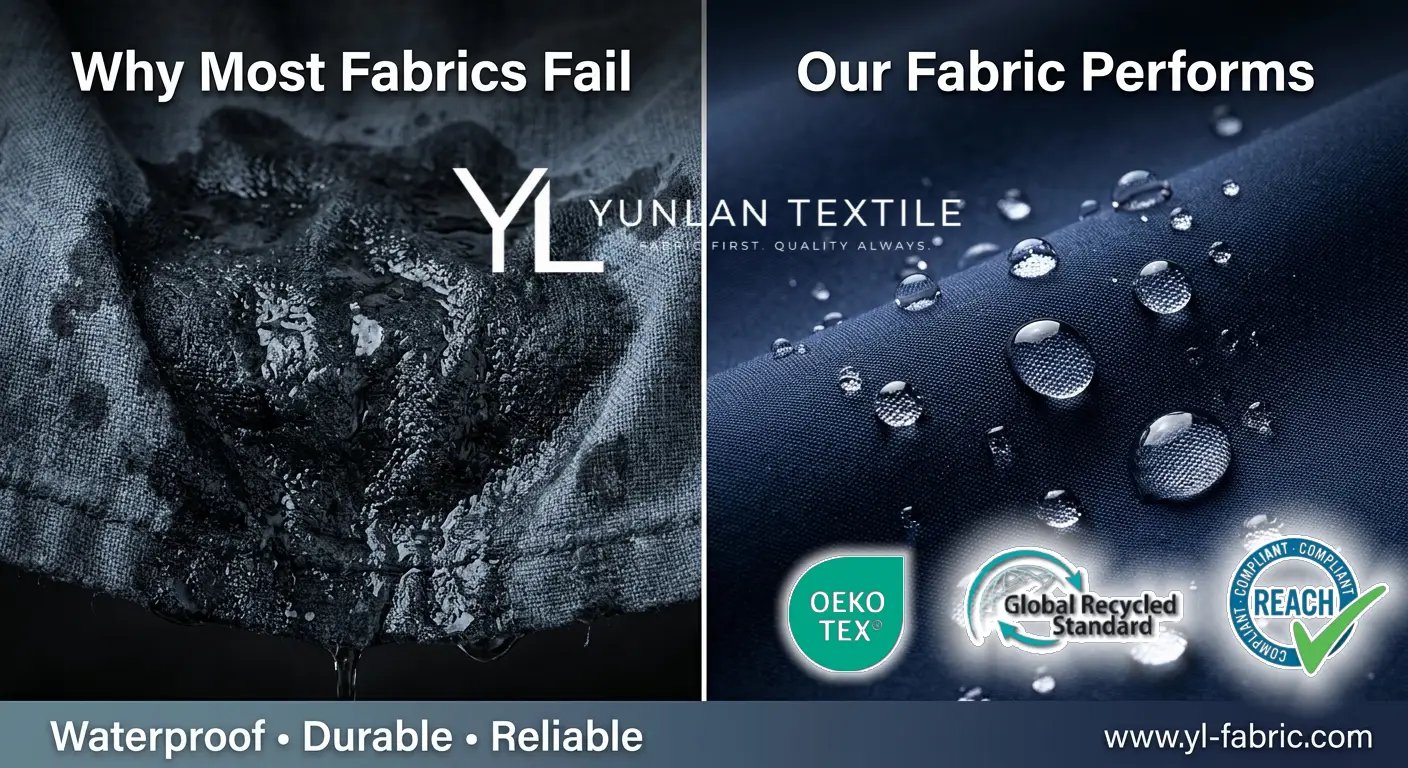
The sample was perfect.
The color was perfect.
The hand feel was perfect.
The buyer was happy.
The designer was happy.
Even the factory was happy.
Which, in hindsight, should probably have been the first warning sign.
Three months later, nobody was happy.
Sound familiar?
After 24 years in textile manufacturing, I’ve seen this story more times than I can count.
A fabric sample receives unanimous approval.
Everyone celebrates.
Emails stop flying.
Meetings disappear from the calendar.
People move on to the next project.
Then bulk production arrives.
And suddenly everyone is staring at the fabric as if it has personally betrayed them.
The sample looked like this.
The bulk looks… different.
The question is:
How does a good sample become a bad bulk order?
The Sample Is Not The Problem
One of the biggest misconceptions in fabric sourcing is believing that a sample proves production capability.
It doesn’t.
A sample proves that a supplier successfully made one good sample.
That’s all.
Making one good sample is a bit like cooking one excellent steak.
Producing 50,000 meters of fabric with identical shade, hand feel, width, and performance is more like running a restaurant every day for six months without a single complaint.
Very different challenge.
The Greige Fabric Has Other Plans
Sometimes the approved sample and the production fabric are technically the same specification.
At least on paper.
Unfortunately, fabric doesn’t always read the paperwork.
Different yarn lots.
Different greige batches.
Different weaving tension.
Small differences can influence:
• Shade
• Hand feel
• Shrinkage
• Stretch recovery
• Functional performance
The laboratory says they’re identical.
Production occasionally disagrees.
Dyeing Machines Have Bad Days Too
Buyers often assume:
“Just repeat the recipe.”
If only it were that easy.
In real production, variables appear everywhere.
Temperature fluctuations.
Machine loading differences.
Water quality variation.
Operator changes.
Production speed adjustments.
The recipe may be identical.
The result may not be.
Anyone who has worked in a dyehouse long enough develops a healthy respect for variables that don’t appear in PowerPoint presentations.
The Most Expensive Sentence In Apparel Manufacturing
“We thought it would be okay.”
I’ve seen more production issues caused by assumptions than by technical limitations.
Assuming the greige is identical.
Assuming the dye formula will transfer perfectly.
Assuming the approved hand feel will remain unchanged.
Assuming everyone understands the specification.
Assumptions are inexpensive during development.
They become surprisingly expensive during bulk production.
Why The Cost Appears Later
This is where things get interesting.
The sample was inexpensive.
The fabric was inexpensive.
The quotation looked fantastic.
Then come:
• Shade claims
• Re-cutting
• Re-work
• Production delays
• Additional testing
• Emergency meetings
• The famous “Can everyone join a quick call?” email
And suddenly the cheapest fabric in the room becomes the most expensive decision in the project.
What We Do Differently
Over the years, we’ve learned that consistency is rarely the result of luck.
It comes from process control.
That means:
✓ Traceable lab dips
✓ Production substrate verification
✓ Continuous stenter monitoring
✓ Inspection to customer standards
✓ Clear documentation
✓ Transparent communication before problems become emergencies
Because nobody enjoys explaining to a customer why the approved sample and the delivered bulk seem to be distant relatives rather than close family members.
After 24 years in textiles, I’ve reached a simple conclusion:
A good supplier is not the one who makes the best sample.
A good supplier is the one who makes the 10,000th meter look like the first.
Because customers don’t buy samples.
They buy production.
And production is where reputations are built—or tested.
I’m curious:
What’s the biggest difference you’ve ever seen between an approved sample and the final bulk order?
Share your story below.
I suspect many of us have survived the same meeting.
Connect with me on LinkedIn:
https://www.linkedin.com/in/ylfabric/
#FabricSourcing
#TextileManufacturing
#ApparelManufacturing
#TextileSupplyChain
#ProductDevelopment
Address
Office Hours
YL Textile
No. 999 Xihuan 2nd Rd.,
Shengze Town, Wujiang Dist.,
Suzhou, Jiangsu, China
Postal Code: 215228
Contact
Mon - Fri: 09:00 - 22:00
Sun: Closed