


Why Every Outdoor Brand Is Quietly Rethinking Its Fabric Strategy for AW26 — And What the Smart Ones Are Doing About It
There's a conversation happening behind closed doors at every outdoor brand right now. It goes something like this: "We need fabrics that perform harder, look better, hit a tighter price point, and land in our warehouse before the sampling window closes — oh, and they have to be certifiably sustainable." Sound familiar?
Julia W
5/12/20266 min read
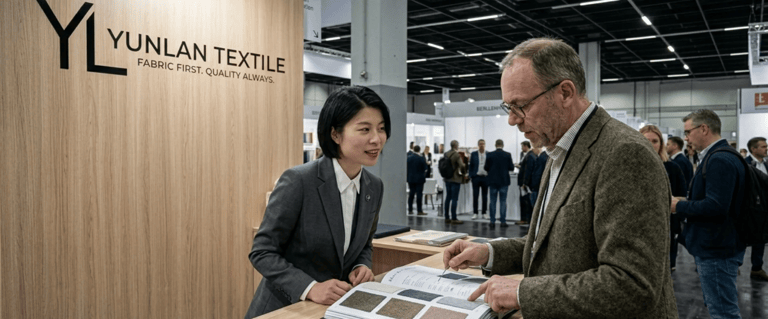
There's a conversation happening behind closed doors at every outdoor brand right now.
It goes something like this:
"We need fabrics that perform harder, look better, hit a tighter price point, and land in our warehouse before the sampling window closes — oh, and they have to be certifiably sustainable."
Sound familiar?
If you're a fabric buyer, product developer, or design director at an outdoor or sportswear label, you've had this exact conversation. Probably more than once this season.
AW26 is shaping up to be the most demanding development cycle the industry has seen in a decade. The brands winning it aren't the ones with the biggest R&D budgets. They're the ones who figured out where to source before everyone else.
This article breaks down the five functional fabric trends defining AW26 outerwear and activewear — and the sourcing realities that will determine which brands actually deliver them to market on time.
The AW26 Functional Fabric Landscape: What's Actually Happening
1. Lightweight Warmth Without the Loft
The era of the puffy jacket is not over — but it's evolving fast. Buyers are demanding shell and midlayer fabrics that trap body heat through construction, not fill weight. The technical answer is tight-weave heat-retention fabrics — typically high-density nylon or polyester wovens with low air permeability values (under 5 CFM) that create a microclimate against the skin without relying on down or synthetic insulation.
The challenge? Most commodity woven fabric suppliers can't produce consistent air permeability specs at scale. Variation from roll to roll kills quality control in post-production.
What serious buyers are specifying:
20D–40D high-density ripstop or plain weave nylon
Air permeability ≤ 3 CFM (ASTM D737 or ISO 9237)
DWR finish rated to AATCC 22 ≥ 80 at delivery
Weight: 45–90 gsm for shell applications
2. Four-Way Stretch Wovens That Actually Last
Stretch wovens have been a sourcing headache for years. The problem isn't the stretch — it's the recovery. Low-grade spandex content and substandard weave tension result in fabrics that bag out after 15 washes, a catastrophic outcome for any outdoor or ski brand with a quality guarantee.
AW26 is seeing renewed demand for warp-and-weft stretch wovens with verified elastic recovery rates above 90% after repeated extension — a spec that filters out most bulk commodity producers immediately.
The right construction uses air-covered or covered-spandex yarn (typically 20D–40D spandex), woven under precisely controlled tension, then heat-set to lock in recovery. It's a process-sensitive product, which is exactly why sourcing it from factories without in-house weaving control is a gamble.
Key specs buyers are locking in:
4-way stretch: ≥ 20% elongation warp and weft
Elastic recovery: ≥ 90% (ASTM D3107 or equivalent)
Tear strength: ≥ 15 N (ASTM D5734)
Available in 75D/72F + 40D spandex constructions
3. Certified Sustainable Wovens — With Real Paper Trails
Sustainability in fabric sourcing has crossed the line from "nice to have" to "contractual requirement" for any brand selling into the EU, UK, or North American premium outdoor market.
The problem is that greenwashing is rampant at the fabric mill level. Buyers are increasingly burned by suppliers who claim GRS (Global Recycled Standard) certification but cannot produce valid scope certificates, or who present recycled content claims unsupported by transaction certificates.
For AW26, the sourcing standard has shifted: buyers want fabrics with traceable recycled content — specifically GRS-certified recycled nylon (rPA6 or rPA66) and recycled polyester (rPET) — with documentation that can be shared up the supply chain to brand sustainability teams and, increasingly, to regulators enforcing the EU Green Claims Directive.
What a clean certification stack looks like:
GRS Scope Certificate from a GBCI-accredited certifier
Transaction Certificates (TCs) per shipment
Bluesign® or OEKO-TEX® STANDARD 100 for chemical compliance
Optional: Higg MSI (Higg Material Sustainability Index) data sheet
4. High-Tenacity Technical Fabrics for Hardshell and Equipment
The premium end of the outdoor market — technical mountaineering, skiing, military-spec workwear — is specifying fabrics that would have been considered industrial-grade five years ago. High-tenacity nylon (HT nylon) and UHMWPE-reinforced wovens are moving into apparel SKUs that need to withstand genuine abrasion, puncture, and tear forces.
Ripstop constructions using HT nylon yarn (tenacity ≥ 8.5 g/d) deliver tear resistance that conventional apparel nylon simply cannot match — and the AW26 market is willing to pay for it in technical shell and pack fabric applications.
The sourcing issue: most apparel-focused woven fabric suppliers don't carry or develop HT nylon constructions. Buyers end up bridging the gap between apparel mills and industrial textile suppliers, adding complexity, lead time, and MOQ pressure to the development calendar.
5. Functional Finishes That Survive Real Wash Cycles
A fabric's performance is only as durable as its finish. AW26 buyers are specifying durable water repellency (DWR), anti-static, and UV-protection finishes with verified wash durability — not just initial performance.
The industry-standard test is washed DWR performance after 20 home laundering cycles (ISO 6330 or AATCC 135). A DWR rating of 80/80 (spray rating/wetting) after 20 washes is now the baseline expectation for any serious outdoor brand — not a premium spec.
The problem in the supply chain is simple: finishing chemistry matters enormously. C6 fluorocarbon-free DWR formulations (the regulatory and consumer-preference direction) require careful application and curing control to achieve durability equivalent to legacy C8 chemistry. Cut-price finishing will not get you there.
The Real Problem No One Talks About: Sourcing Bottlenecks Are Earlier Than You Think
Here's the truth that takes most buyers a painful season to learn:
By the time you see a fabric trend in a trade publication, the development window for that fabric is already closing.
Outdoor brand calendars for AW26 hit final fabric approval somewhere between September and November 2025. Brands that didn't have supplier relationships and sample stock in hand by Q2–Q3 2025 are now navigating backlogged development pipelines at their current suppliers — or starting from scratch with new ones under real time pressure.
This is where working with the right functional fabric manufacturer makes or breaks a season.
How YUNLAN Textile Solves the AW26 Sourcing Problem
YUNLAN Textile is a specialist woven and functional fabric manufacturer supplying outdoor, sportswear, and fashion brands globally. Here's what that actually means in practice for AW26 buyers:
Fast, low-risk sampling. Standard sampling turnaround is 7–10 business days from spec confirmation. You get lab-dipped color standards, physical swatches with full test data sheets, and actual weave samples — not stock color cards. This matters when your design calendar doesn't have three weeks for sample chasing.
Stable, consistent bulk production. Roll-to-roll consistency in weight (±3 gsm tolerance), color (ΔE ≤ 1.0), and performance specs is not a marketing claim — it's what makes downstream cutting and sewing predictable. YUNLAN maintains this through in-house quality control at every production stage.
Verified sustainability documentation. GRS certification, OEKO-TEX® STANDARD 100, and full transaction certificate support for brands building sustainable product lines with traceability requirements.
Broad technical range under one roof. From 20D ultralight ripstops to 4-way stretch wovens to HT nylon technical fabrics — developed, woven, and finished in-house. One supplier relationship covering your full functional fabric specification range.
Global delivery reliability. Established logistics partnerships for reliable FOB/CIF delivery to Europe, North America, and Japan. No last-minute shipping surprises when your season launch is non-negotiable.
5 Questions Fabric Buyers Ask Us Every Season
Q1: What's your minimum order quantity (MOQ) for woven functional fabrics?
Our standard MOQ is 300–500 meters per colorway depending on construction complexity. For development-stage projects or first orders from new customers, we work with smaller sampling quantities to minimize your risk before committing to bulk. We understand that a new supplier relationship needs to be built on trust, not a high-stakes first order.
Q2: Can you match our existing lab-dip standards or Pantone references?
Yes. We work from Pantone TCX/TPX references, physical lab-dip standards, or buyer-supplied color targets. Our dye lab produces matched lab dips within 7 business days. Metamerism control (ensuring color consistency under different light sources) is part of our standard process for apparel fabric customers.
Q3: How do you handle DWR finish specification and testing?
We apply C6-free (PFC-free) DWR finishes as standard, using chemistry compliant with bluesign® and OEKO-TEX® ECO PASSPORT requirements. We test DWR performance to AATCC 22 (spray test) and can provide washed DWR data after 10 or 20 laundering cycles on request. If you have a specific DWR durability spec, share it during the development brief and we'll confirm achievability before sampling begins.
Q4: Do you provide test reports with bulk shipments?
Yes. Standard bulk shipment documentation includes a fabric inspection report (4-point system), physical test data for the key performance specs (weight, tear strength, DWR rating), and color measurement data against the approved standard. Additional third-party testing (SGS, Bureau Veritas, Intertek) can be arranged at buyer request.
Q5: How far in advance should we approach you for AW26/SS27 development?
For AW26 development, the ideal window for new fabric development (new construction, new color standard) is 16–20 weeks before your required bulk delivery date. If you're working from our existing base constructions with color development only, 10–12 weeks is workable. The earlier you brief us, the more flexibility we have on sampling iterations. If your timeline is already compressed — reach out anyway. We'll tell you honestly what's achievable.
The Takeaway for AW26 Buyers
The brands that will win AW26 aren't waiting for fabric trends to become mainstream before they act. They're locking in supplier relationships now — building development pipelines for lightweight high-density wovens, certified sustainable constructions, durable-finish functional fabrics, and stretch wovens with real performance specs.
If any of the five trend areas above map to your AW26 development brief, and you're not confident your current fabric supply chain can deliver on specification, lead time, and documentation — that's a problem worth solving before September.
We'd rather have an honest conversation about what's achievable for your brief now than a rushed one in three months.
Connect With YUNLAN Textile
WhatsApp (fastest response): https://wa.me/86135457198
Website (EN): https://www.yl-fabric.com
Website (DE — Deutsch): https://www.yl-fabric.com/de
Website (RU — Русский): https://www.yl-fabric.com/ru
YUNLAN Textile — Woven & Functional Fabric Manufacturer Supplying outdoor, sportswear, and fashion brands globally Fast sampling · Stable quality · Reliable bulk delivery
Address
Office Hours
YL Textile
No. 999 Xihuan 2nd Rd.,
Shengze Town, Wujiang Dist.,
Suzhou, Jiangsu, China
Postal Code: 215228
Contact
Mon - Fri: 09:00 - 22:00
Sun: Closed