




The Fashion Industry Looks Strong — But Most Brands Are Quietly Struggling With These Problems
Published by YUNLAN Textile | Woven & Functional Fabric Manufacturer The runway shows are packed. The trade show floors are buzzing. The press releases announce record collections.
Julia W
5/14/202613 min read
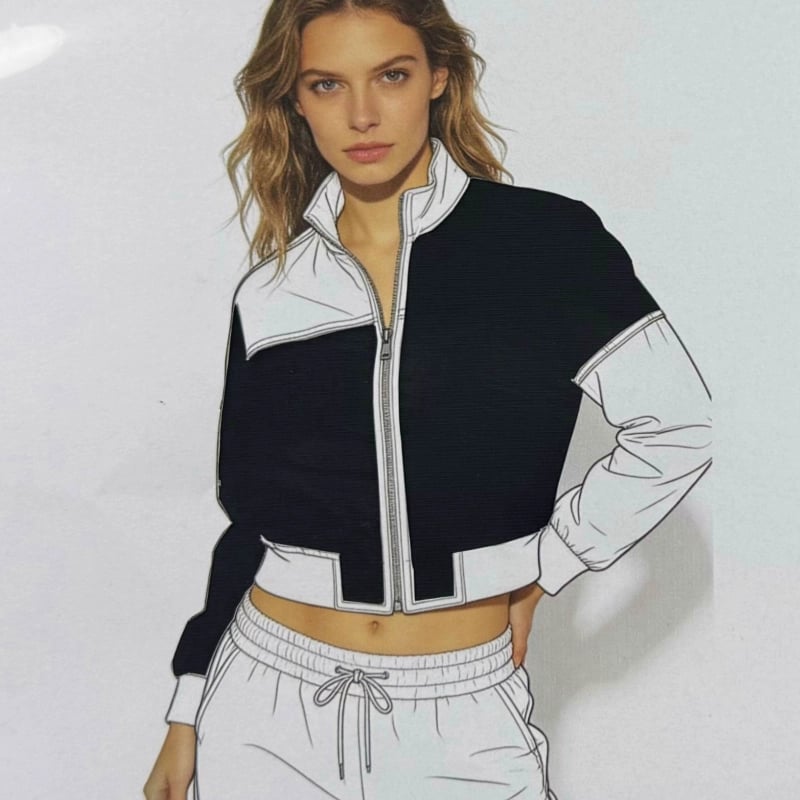
The runway shows are packed. The trade show floors are buzzing. The press releases announce record collections.
And behind closed doors, the same conversation is happening at brands of every size, from independent labels to publicly traded sportswear groups:
"We can't keep running like this."
The global fashion and apparel industry generated over $1.7 trillion in revenue in 2023. On paper, it looks like a machine that never stops. In practice, it is an industry where the majority of brands are operating under structural pressures so severe that many won't survive the decade in their current form.
This is not pessimism. It is pattern recognition.
The brands that will still be standing — and growing — in 2028 are the ones willing to name these problems clearly, understand their root causes, and make the sourcing, operational, and design decisions that address them before they compound.
Here are the ten problems quietly breaking fashion brands right now. And what to do about each of them.
Problem 1: Inventory Has Become a Brand-Killer
Overstock was always a manageable cost of doing business. Not anymore.
The post-pandemic inventory correction that crushed brands like Gap, H&M, and Lululemon between 2022 and 2023 was not an anomaly — it was a stress test that revealed a structural flaw baked into how fashion sourcing has worked for thirty years.
The traditional model: forecast demand 6–12 months out, commit to bulk fabric and production orders, receive finished goods, sell through. The assumption holding this model together: that demand is predictable enough to justify the upfront commitment.
That assumption is broken. Consumer purchase behaviour has fragmented to the point where six-month forward forecasting for fashion SKUs carries error margins that can turn a "successful" season into a margin-destroying markdown event.
The numbers are brutal. Industry analysts estimate that unsold inventory in the global apparel sector runs at 30–40% of production volume in a typical year. At average wholesale prices, this is hundreds of billions of dollars of product either marked down to destruction, sitting in warehouse space that costs money every day, or literally incinerated — with the reputational and regulatory consequences that now come with that choice.
The root cause at the fabric level: Long minimum order quantities (MOQs) at fabric mills force brands to over-commit to materials before demand signals are confirmed. When sell-through disappoints, the markdown begins — and the fabric investment is the first casualty.
What's changing: Brands building fast-repeat, small-batch sourcing relationships with fabric suppliers are gaining the ability to chase demand rather than predict it. Fabric MOQs of 300–500 meters, combined with reliable repeat capability in established colorways, allow for responsive production cycles that match real sell-through rather than forecast fiction.
Problem 2: Return Rates Are Eating the Business Alive
E-commerce was supposed to be the margin expansion story of the decade. For many apparel brands, it has become a margin destruction machine.
Return rates in online fashion retail average 25–40% globally — and in premium and performance categories, they run higher. Every returned unit carries reverse logistics cost, inspection and reprocessing cost, and in many cases, a unit that cannot be resold at full price because of damage, soiling, or simply missed the selling season.
The less-discussed driver of high return rates is fabric and product performance failure. Consumers return apparel for two dominant reasons: fit (addressed by size and pattern) and feel/performance (addressed by fabric quality). When a fabric stretches out, pills aggressively, loses its DWR performance after two washes, or simply feels cheaper in person than it looked in a product photo, it goes back.
The connection to sourcing: Brands sourcing from lowest-cost-available fabric suppliers are systematically underpricing the quality risk into their P&L. The margin saved on fabric is surrendered — with interest — in returns, customer service, and repeat purchase destruction.
The structural fix is not complicated: specify tighter fabric performance requirements, test wash durability and pilling resistance before bulk approval, and build quality control into the fabric sourcing relationship rather than the post-production returns process.
Problem 3: Input Costs Have Structurally Reset — And Are Not Coming Back Down
The cost inflation that moved through the apparel supply chain from 2021 onwards — energy, logistics, labour, raw materials — has partially corrected. But the idea that input costs will return to 2019 levels is a planning assumption that will cause damage to anyone still holding it.
What has permanently changed:
Energy costs in textile production (dyeing, finishing, stentering) are structurally higher in Europe and have repriced supply chains that were optimized for cheap energy. This affects every fabric produced in energy-intensive processes — which is most of them.
Logistics costs normalized after the 2021–2022 spike but have not returned to pre-pandemic baselines. Red Sea route disruptions, port congestion, and container availability volatility have become features of the supply chain, not bugs.
Labour costs in major apparel and textile manufacturing regions (China, Bangladesh, Vietnam, Turkey) have risen — in some cases significantly — and continue to rise. This is not a cycle; it is a structural shift driven by minimum wage legislation, labour rights enforcement, and economic development.
Sustainable raw material premiums are real and persistent. GRS-certified recycled nylon costs more than virgin nylon. OEKO-TEX® certified finishing processes cost more than uncertified equivalents. As these become table-stakes requirements rather than premium differentiators, the cost base of "standard" apparel fabric production rises.
The strategic response is not to chase the cheapest unit cost — that race is both unwinnable and destructive. It is to optimize value per dollar of material cost through better specification, fewer sampling iterations, more reliable production quality (fewer rejections and remakes), and supplier relationships deep enough to share cost innovation rather than just negotiate price.
Problem 4: Supply Chain Instability Has Become the New Normal
COVID broke the assumption that global supply chains were stable. The years since have confirmed it was not a temporary disruption but a permanent recalibration.
Brands building on supply chains with single points of failure — one country, one factory, one logistics route — have been burned repeatedly. Geopolitical friction (US-China trade policy, EU carbon border adjustment mechanisms, regional conflict impacts on shipping routes), climate events disrupting agricultural and manufacturing regions, and pandemic-era capacity volatility have made supply chain resilience a strategic imperative rather than a procurement buzzword.
For fabric buyers specifically, supply chain instability manifests as: late deliveries that kill seasonal production windows, quality inconsistency from factory substitution when preferred suppliers are constrained, and price volatility on commodity inputs that makes costing unreliable.
The structural response is supplier diversification and depth of relationship. Brands with two or three deeply qualified fabric suppliers — each capable of covering the full range of required constructions — are dramatically more resilient than brands with ten shallow vendor relationships. When a problem hits, depth of relationship determines whether you get priority allocation or a form letter.
Problem 5: Environmental Pressure Is Now a Commercial Reality
Sustainability stopped being a brand values story and became a regulatory and commercial compliance requirement somewhere around 2023. By 2028, it will be the cost of market access in the EU and increasingly in other developed markets.
The legislative stack facing apparel brands is real and accelerating:
The EU Strategy for Sustainable and Circular Textiles mandates design-for-durability, recyclability, and minimum recycled content thresholds for textile products sold in the EU market. The Green Claims Directive prohibits vague sustainability marketing without substantiated, auditable evidence — making claims like "eco-friendly fabric" or "sustainable collection" legally risky without documentation. Extended Producer Responsibility (EPR) schemes are being implemented across EU member states, making brands financially responsible for end-of-life collection and recycling of textile products.
For fabric buyers, this translates directly: the fabrics going into product sold in the EU from 2026 onwards need certified recycled content, traceable supply chains, and chemical compliance documentation — not as aspirational goals but as regulatory requirements.
Brands that have not started building certified sustainable fabric sourcing programs are not "running behind the curve." They are approaching a commercial cliff edge.
Problem 6: Consumers Are Moving Faster Than Any Forecast Can Track
The consumer of 2026 is not the consumer that the fashion industry's planning systems were built to serve.
Social media, algorithmic trend cycles, creator-driven microtrends, and the democratization of fashion discovery have compressed trend lifecycles from seasons to weeks. A silhouette or color story that is peak-cultural-relevance in February can feel dated by April. Brands building product programs on six-to-twelve-month planning cycles are structurally misaligned with the pace of consumer attention.
This is not a problem that marketing solves. It is a sourcing and production problem. Brands that can read demand signals early and convert them to product in compressed timelines — because their fabric and production supply chain operates at the speed of the market — have a structural advantage over brands locked into traditional bulk sourcing calendars.
The fabric sourcing implication: relationships with suppliers capable of fast development, small-batch production, and reliable repeat orders matter more every year. The ability to sample a new construction in seven days and place a 300-meter order that ships in three weeks is not a nice-to-have — it is the operational architecture for surviving in this market.
Problem 7: Functional Performance Expectations Have Permanently Elevated
The pandemic normalized athletic and performance apparel as everyday dressing. The consumer who started wearing performance fabrics to walk the dog in 2020 now expects performance-fabric properties — stretch, moisture management, packability, durability — in categories that had never historically needed to deliver them.
Expectations that have permanently shifted:
Office wear and smart casual categories now face consumer expectations for stretch, wrinkle resistance, and washability that were previously irrelevant. Travel wear is expected to combine technical performance (water resistance, packable weight) with refined aesthetics. Outerwear purchased for urban use is evaluated against technical standards set by outdoor performance gear.
For brands, this means the fabric specification floor across almost every category has risen. Consumers who have worn genuinely good performance fabric know what it feels like — and they notice when a product doesn't deliver.
For fabric buyers: The era of sourcing generic woven fabrics for categories that "don't need performance" is over. Every customer-facing category now benefits from at least baseline functional specification — stretch recovery, easy-care finish, abrasion resistance — delivered in fabrics that look and feel like premium material rather than commodity textile.
Problem 8: Social Media Marketing Costs Have Exploded — And ROI Has Collapsed
Digital advertising CPMs across Meta, TikTok, and Google Shopping have increased 3–5× over the past five years for apparel brands. Customer acquisition costs (CAC) that were sustainable at 2019 ad rates are no longer viable at 2026 ad rates — and the trajectory continues upward as more brands compete for the same eyeballs.
The implication that most brands have not fully absorbed: product quality has become a marketing cost reduction strategy.
A brand with consistently excellent product quality generates organic UGC (user-generated content), genuine reviews, word-of-mouth referrals, and repeat purchase rates that reduce dependence on paid acquisition. A brand with average product quality — including fabric quality — pays the full market rate for every customer, every time.
This is not a soft argument. The math is direct: a 10% improvement in repeat purchase rate across a customer base worth $10M in annual revenue reduces paid acquisition dependency by hundreds of thousands of dollars annually. The single most reliable driver of apparel repeat purchase is product satisfaction — and the single most frequent driver of product dissatisfaction is fabric quality and durability.
The sourcing connection is exact: Investing in fabric quality — better raw materials, tighter specifications, verified performance data — is a customer retention investment. The margin it costs at fabric level returns as reduced CAC and improved LTV.
Problem 9: AI Is Disrupting Design, Forecasting, and Consumer Behaviour Simultaneously
Artificial intelligence is moving through the fashion industry faster than most brands' organizational change processes can handle.
On the demand side: AI-powered personal styling, recommendation algorithms, and image search are changing how consumers discover and evaluate fashion products. Products that photograph well and carry clear functional narratives perform better in AI-curated shopping environments than products dependent on traditional editorial support.
On the design side: Generative AI tools are compressing the concept-to-brief timeline, enabling brands to produce more SKUs at lower creative cost — which increases the pressure on production and sourcing infrastructure to deliver at the same compressed pace.
On the forecasting side: AI-powered demand sensing tools are beginning to provide real-time sell-through intelligence that can, in theory, drive responsive production decisions. But this only creates value if the supply chain is capable of responding — which requires supplier relationships built for agility, not just cost.
The hidden AI risk for brands: AI lowers the barrier to design output while raising the bar on production execution. Brands that invest in generative AI for design but neglect the operational infrastructure — including fabric sourcing relationships — to deliver on what AI produces will find themselves generating beautiful concepts they cannot profitably manufacture.
Problem 10: Finding a Reliable Fabric Supplier Is Genuinely Hard
This is the problem that underlies all the others — and the one that receives the least honest discussion in the industry.
There is no shortage of fabric suppliers. There is a profound shortage of fabric suppliers who combine technical capability, consistent quality, reliable delivery, honest communication, and documentation discipline at commercially viable prices.
The fabric sourcing market has exactly the information asymmetry problem that creates expensive mistakes: you cannot fully evaluate a supplier until you have run a production order with them. By the time a quality or delivery failure is confirmed, you are inside your production window with limited options.
The failure modes buyers encounter most frequently:
The showroom sample problem. Lab samples and development samples produced to win the order, bulk production executed with different (cheaper) raw materials or process shortcuts. This is industry-endemic at volume-driven commodity mills.
The quality consistency problem. First order acceptable, subsequent orders showing drift in weight (gsm), color, or performance spec. Without in-house quality management systems and roll-to-roll measurement, consistency is luck rather than process.
The certification theater problem. Certificates presented at sampling that cannot be traced to actual bulk production. Transaction Certificates (TCs) that don't exist, GRS scope certificates that don't cover the specific fabric being sold. Greenwashing at the mill level is real and increasingly consequential for brands that make sustainable product claims.
The communication problem. Suppliers who confirm timelines they cannot meet, promise specs they are not testing, and escalate problems only after they have become crises. Good operational communication — proactive exception reporting, honest capability assessment, early flagging of risk — is rarer than it should be at the commodity end of the supplier market.
The structural answer is not finding a perfect supplier — it is building a supplier qualification process rigorous enough to identify the ones worth developing relationships with, and then investing in those relationships deeply enough to create mutual accountability.
The Common Thread: Every Problem Has a Sourcing Dimension
Read through these ten problems again and notice what they share: every single one of them is either caused or significantly worsened by sourcing choices made at the fabric level.
Inventory pressure is amplified by high MOQs and long lead times
Return rates are driven by fabric quality and performance failures
Cost inflation is managed or compounded by supplier relationship depth
Supply chain instability is mitigated by supplier diversification and relationship investment
Environmental pressure is addressed — or ignored — at the material specification level
Consumer speed expectations are met or missed based on development and repeat turnaround capability
Performance expectations are satisfied by fabric specification discipline
Marketing ROI is improved by the product quality that fabric investment delivers
AI disruption is navigated by operational infrastructure, starting with sourcing
Reliable suppliers are found through rigorous qualification, not luck
How YUNLAN Textile Is Built for This Landscape
YUNLAN Textile is not a commodity fabric supplier competing on the lowest unit price. We are a specialist woven and functional fabric manufacturer built for the brands that understand what the ten problems above actually cost — and are sourcing accordingly.
What that means in practice:
We manufacture in-house, which means the sample you approve is the fabric that arrives in bulk. No bait-and-switch between development and production.
We provide complete test documentation — weight, performance specs, color measurement data — with every bulk shipment. Not on request. Routinely.
Our GRS, OEKO-TEX® STANDARD 100 certifications come with actual Transaction Certificates per shipment — the documentation your sustainability and compliance teams need.
Our standard sampling turnaround is 7–10 business days. Our standard MOQ starts at 300 meters. We operate at both small-batch and full bulk scale with consistent quality standards across both.
We tell you what's achievable honestly — before you commit, not after.
If any of the ten problems above are on your agenda for 2026 and beyond, the conversation starts here.
6 Questions Buyers Ask When They're Ready to Fix Their Sourcing Problems
Q1: We've had bad experiences with Chinese fabric suppliers before. What's different about YUNLAN?
This is the right question to ask — and we'd rather you ask it than not. The experiences you're describing (showroom samples that don't match bulk, certifications that don't stack up, communication that disappears when problems arise) are real and common at the commodity end of the market. YUNLAN operates differently because we invest in process controls that make consistency possible: in-house weaving and finishing, roll-to-roll quality measurement, documented production records per order. We encourage first orders at smaller quantities specifically so you can verify the gap between our claims and our delivery before committing to bulk. We will tell you what we can and cannot do before you place the order — not after.
Q2: How do you handle cases where bulk quality doesn't match approved lab samples?
Our quality control process is designed to catch specification drift before shipment, not after. Every bulk production run is measured against the approved standard for weight (±3 gsm tolerance), color (ΔE ≤ 1.0), and key performance specs before it leaves our facility. If a production run falls outside approved tolerances, we alert the buyer before shipment and present options: adjustment, remake, or shipment with documented deviation for buyer decision. We do not ship out-of-spec fabric without disclosure.
Q3: We need fabrics for multiple categories — performance, fashion, and basics. Can one supplier handle that range?
YUNLAN's construction range covers functional performance fabrics (waterproof, stretch, HT nylon), fashion-forward wovens (refined surface, structured texture, Urban Outdoor aesthetics), and clean commercial basics in natural and synthetic blends. Consolidating to fewer, deeper supplier relationships reduces total vendor management cost and improves consistency across your range — and yes, this is a range we can support. Send us your development brief across categories and we'll tell you honestly what's in our wheelhouse and what isn't.
Q4: What documentation do you provide for brands with EU sustainability reporting requirements?
For brands operating under CSRD, EU Green Claims Directive, or supply chain due diligence requirements, we provide: GRS Scope Certificate (mill level), Transaction Certificates per bulk shipment documenting recycled content percentage and origin, OEKO-TEX® STANDARD 100 certificate for chemical compliance, and test reports for performance claims. We can also provide Higg MSI data sheets for fabrics in our certified range. If you have specific documentation requirements beyond this standard set, share them during development and we'll confirm what we can provide.
Q5: Our lead times are already compressed. Can you genuinely deliver in the timelines you claim?
Standard sampling: 7–10 business days from confirmed spec. Bulk production lead time: 25–35 days from PO confirmation for existing constructions, 35–45 days for modified or new constructions. These are our actual operational timelines — not aspirational ones. If your timeline is shorter, tell us specifically what you need and we will tell you directly whether it's achievable. We would rather lose a brief by being honest about lead time than win it and fail on delivery.
Q6: We're a smaller brand. Is YUNLAN set up for our scale?
Yes — deliberately. Our MOQ structure (from 300 meters for existing constructions) is designed to be accessible to brands at growth stage, not just established volume buyers. We work with brands at every scale from emerging independent labels to global sportswear groups. The quality standard, documentation, and service level are the same regardless of order size. Many of our longest-standing brand relationships started as 300-meter development orders.
Connect With YUNLAN Textile
WhatsApp (fastest response): https://wa.me/86135457198
Website (EN): https://www.yl-fabric.com
Website (DE — Deutsch): https://www.yl-fabric.com/de
Website (RU — Русский): https://www.yl-fabric.com/ru
YUNLAN Textile — Woven & Functional Fabric Manufacturer Supplying outdoor, sportswear, and fashion brands globally Fast sampling · Certified sustainable · Reliable bulk delivery
#FashionIndustryProblems #FabricSupplierQuality #ApparelSupplyChain #SustainableFashionSourcing #FabricBuyerTips
Address
Office Hours
YL Textile
No. 999 Xihuan 2nd Rd.,
Shengze Town, Wujiang Dist.,
Suzhou, Jiangsu, China
Postal Code: 215228
Contact
Mon - Fri: 09:00 - 22:00
Sun: Closed