

The Fabric That Disappears — And That's Exactly the Point
For outdoor apparel designers, technical wear sourcing managers, softshell fabric buyers, and product developers building the next generation of performance outerwear.
Julia W
5/28/20269 min read
Before We Talk About the Fabric, Let's Talk About What You're Actually Building
When your customer zips up a softshell jacket at the trailhead, they're not thinking about fiber composition.
They're thinking about the weather moving in from the west. Whether their pack is balanced. Whether their knees will hold on the descent. The fabric you chose — the one your team spent weeks sampling, testing, and approving — is completely invisible to them.
That invisibility is the goal.
Because when a fabric is doing its job, it disappears. It moves when the body moves. It sheds water without stiffening. It breathes without venting. It holds its shape through a week of hard use and a machine wash cycle. It never announces itself.
But when a fabric fails — when it stiffens in cold air, when it soaks through in a 20-minute drizzle, when stretch recovery dies after three outings — suddenly it's all the wearer can think about.
That's the conversation behind YL-2429.
The Quiet Work Behind a High-Performance Fabric
Behind every high-performance fabric is a constant balance between functionality and comfort.
To make the fabric lighter, we repeatedly refine the fabric construction and weave structure — testing how fewer grams per square meter can still hold structure, still resist abrasion, still drape cleanly over a technical pattern piece.
To achieve a more natural stretch and recovery, we test different fiber blends and yarn compositions — exploring how nylon and spandex interact under tension, how the warp and weft behave across a full range of motion, and what happens to hand feel when the finishing chemistry changes.
To meet the demands of outdoor environments, we expose the fabric to heat, rain, abrasion, and stretch-performance testing — because a fabric that performs beautifully in a lab and falls apart on a ridge after two hours of wind-driven rain isn't a fabric worth sourcing.
Most of the time, people don't consciously notice a fabric. They just move through their day — climbing, hiking, commuting, waiting out weather.
But truly exceptional fabric makes people forget it's even there.
Because it naturally becomes part of movement, weather, and everyday life.
That is what YL-2429 is designed to be.
YL-2429: The Technical Specification Behind the Experience
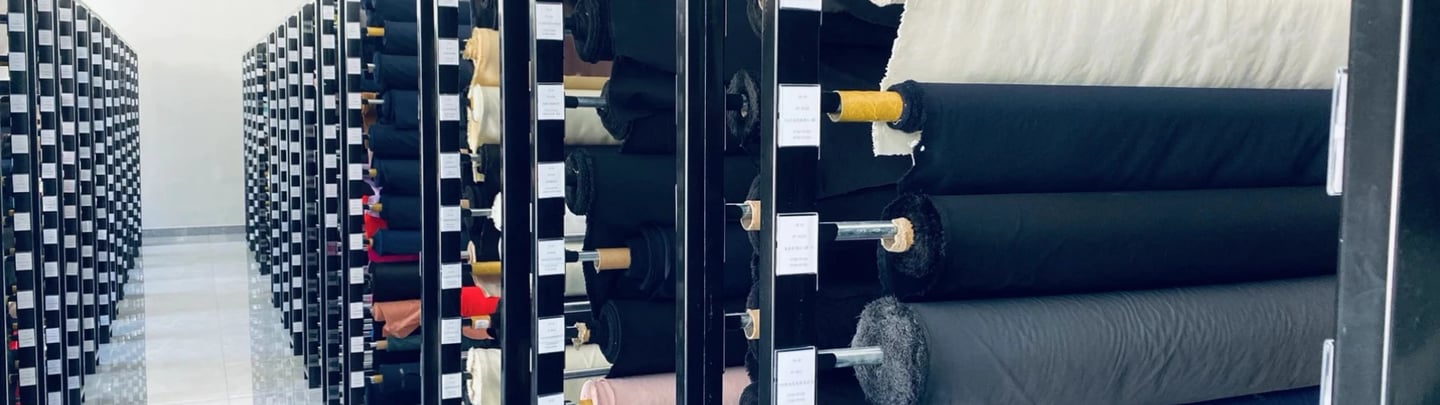
YL-2429 is a 170GSM PFAS-free, C0 water repellent, 4-way stretch nylon woven fabric developed by YUNLAN Textile for softshell jackets, technical hiking pants, and outdoor activewear where performance demands and environmental responsibility intersect.
At 170 grams per square meter, it occupies the lightweight end of technical outerwear fabric — trim enough for packable mid-layers and performance shells, yet structured enough to anchor the clean silhouettes that modern outdoor apparel design requires.
Here is what each specification actually means for the garments you're building.
PFAS-Free C0 Water Repellent Finish
This is the specification that separates forward-looking technical fabric development from legacy chemistry.
PFAS — per- and polyfluoroalkyl substances — have been the conventional backbone of durable water-repellent (DWR) finishing in performance textiles for decades. They work. The problem is that they persist indefinitely in biological and environmental systems, accumulating in ways that have drawn increasing scrutiny from regulators, retail buyers, and end consumers.
C0 DWR — also referred to as fluorine-free DWR or PFC-free water repellent — achieves water beading and surface moisture resistance through alternative chemistries that do not carry the same persistence risk.
YL-2429 uses a C0 water repellent system. Water beads and rolls off the fabric surface. Light rain and trail moisture are managed effectively without saturating the face fabric and triggering the "wet out" that collapses breathability and adds weight. And it does this without fluorinated chemistry.
For outdoor apparel brands navigating retail compliance requirements, bluesign® or OEKO-TEX alignment, or sustainability commitments made to retail partners — this is not a minor distinction. It is the direction the entire market is moving.
Long-tail keywords naturally embedded here: PFAS-free DWR fabric for softshell jackets, fluorine-free water repellent stretch nylon, C0 DWR nylon fabric outdoor apparel supplier, sustainable performance fabric for outerwear brands
4-Way Stretch Nylon Construction
Nylon's inherent tenacity — its resistance to abrasion, tearing, and yarn breakage under load — makes it a preferred fiber for technical outdoor applications. When combined with a spandex or elastane component within a woven structure that supports bidirectional elongation, the result is a fabric that moves with the body rather than against it.
4-way stretch means extension along both the warp (lengthwise) and weft (crosswise) axes. In a softshell jacket, this translates to unrestricted shoulder and back movement when reaching for gear or scrambling over terrain. In hiking pants, it means the crotch seam isn't fighting the wearer on every step up.
For pattern makers and technical designers, 4-way stretch in a woven substrate also allows for more aggressive seam placement and fewer fabric panels — reducing cut-and-sew complexity and potential failure points in the final garment.
170GSM Weight — Engineered for Lightweight Layering Systems
Fabric weight communicates category. At 170GSM, YL-2429 reads as a lightweight technical shell — appropriate for active-output layering systems where the wearer is generating heat and needs the shell to breathe, not insulate.
It is light enough to compress into a pack pocket without significant bulk. It carries enough structural integrity to support hardware — zippers, snap tabs, cord channels — without distorting under tension. And the plain woven face provides a clean print and dyeing surface for brands working with custom colorways or tonal branding.
For product developers building a technical outerwear line with a cohesive weight architecture — base, mid, shell — this fabric fits clearly into the shell/active-layer position.
Who Is YL-2429 Built For
Softshell Jacket Developers
You're building a shell that works across variable mountain conditions — morning frost, midday sun, afternoon drizzle. You need stretch, weather resistance, and breathability to coexist. The tradeoff between these three has historically been the defining challenge of softshell fabric development.
YL-2429 is engineered for exactly this convergence.
Relevant search terms for your sourcing brief: 4-way stretch nylon fabric for softshell jackets, lightweight nylon stretch woven for outerwear, PFAS-free softshell fabric supplier, technical shell fabric bulk order China
Hiking Pants Sourcing Teams
You're sourcing fabric for pants that need to perform across trail terrain — mud, rock, brush, stream crossings, sustained movement — while also meeting the aesthetic expectations of a lifestyle-outdoor consumer who may wear the same pair from the trailhead to the airport.
Nylon's abrasion resistance supports the durability side. The C0 DWR manages incidental moisture. The 4-way stretch handles mobility. The 170GSM weight keeps the package trim.
Relevant search terms in your category: stretch nylon fabric for hiking pants, durable water repellent hiking pant fabric, woven nylon spandex fabric outdoor pants, technical hiking apparel fabric manufacturer
Technical Outdoor Apparel Brands with Sustainability Commitments
Your brand has made public commitments to eliminating PFAS chemistry from your supply chain. Your retail partners — specialty outdoor retailers, European-market distributors, sustainability-forward e-commerce channels — are asking for documentation. You need a fabric that performs and satisfies compliance requirements simultaneously.
YL-2429's PFAS-free C0 finish is the starting point for that conversation.
Relevant search terms: fluorine-free DWR fabric for outdoor brands, PFAS-free stretch nylon fabric sourcing, sustainable outdoor fabric supplier, eco-friendly performance fabric for activewear
Fabric Buyers and Textile Agents Managing Multi-Brand Portfolios
You're handling multiple clients across outdoor, performance lifestyle, and workwear categories. Each has different end-use requirements, different compliance environments, and different tolerance for sampling risk. You need suppliers who communicate clearly, deliver consistently, and don't create problems you then have to manage.
That's the operational promise behind working with YUNLAN Textile — which we'll cover directly.
Where Most Sourcing Headaches Actually Come From
This section is for the buyers and product directors who have been through at least one sourcing cycle that didn't go as planned.
The spec sheet looked right, but the bulk didn't match. Lab dips get approved. Bulk production drifts. The color that looked like forest green in the sample arrives in a shade that reads khaki under retail lighting. The stretch recovery that tested at 90% comes back at 78% in the shipment. By the time QC catches it, the production window has passed.
The DWR failed faster than expected. Water beading held through the first wash. By the fifth wash, the fabric was wetting out. The DWR chemistry wasn't durable enough for the end-use, and no one flagged it at the sampling stage because no one ran a wash-cycle performance test before approval.
The supplier went quiet at a critical moment. Questions about fiber certification documentation, compliance testing, or lead time adjustments went unanswered for days. The answers eventually came — but the delay cost a week of production planning.
The MOQ didn't match the project reality. The minimum order quantity locked up capital in fabric that took three seasons to move through. The cash flow impact outlasted the product's market window.
These are not edge cases. They are patterns that experienced sourcing teams recognize immediately.
Working with YUNLAN Textile — What "Straightforward" Actually Means
We are not going to tell you our process is error-free. Supply chain work involves variables, and anyone who tells you otherwise is selling something other than fabric.
What we will tell you is how we work:
Technical documentation upfront. Before you commit to sampling, you receive clear specifications — GSM, fiber composition, stretch percentage, DWR chemistry type, available widths and colorways. No ambiguity in the spec sheet means fewer surprises in the lab test results.
Sample-to-bulk traceability. The fabric you approve in the sampling stage is produced against the same process parameters as bulk. Color management follows an approved lab dip workflow. If a variable shifts, we flag it before you discover it in a container.
Responsive communication on technical questions. If your compliance team needs documentation on chemical finishing or your QC team needs test method references, those answers come from people who understand the fabric — not from a sales team reading from a product sheet.
Transparent pricing structure. Standard finishing options are priced into the quote. You are not discovering surcharges when the invoice arrives. If a custom finishing requirement changes the cost, you know before production starts.
No hidden minimums on standard specifications. For standard colorways and finishes, MOQ is discussed openly and tied to your project scope — not set arbitrarily high to protect production efficiency at your expense.
Working with YUNLAN Textile is not a guarantee of zero friction. It is a commitment to making friction visible and manageable before it becomes a crisis.
Frequently Asked Questions
Q: What is the exact fiber composition of YL-2429? A: YL-2429 is a nylon-based woven fabric with a spandex or elastane component that enables 4-way stretch. For exact blend percentages relevant to your labeling, compliance documentation, or lab test setup, please request the full technical data sheet.
Q: How does C0 DWR compare to traditional fluorinated DWR in terms of wash durability? A: This is a fair question and one the entire industry is actively working to address. C0 DWR chemistries have advanced significantly and perform well across normal garment use cycles. Independent wash durability data for YL-2429 is available upon request. If your brand has specific wash-cycle performance thresholds (e.g., ISO 105-C06 or AATCC 61 testing), we recommend discussing these at the sampling stage so expectations are aligned before bulk approval.
Q: Can YL-2429 be laminated for a fully waterproof membrane construction? A: Nylon woven face fabrics in this weight range are compatible with membrane lamination. If your technical brief requires a 2L or 3L waterproof construction, please discuss your lamination partner and bonding requirements with us directly. The fabric can serve as the face layer in a laminated system.
Q: Is this fabric suitable for sublimation printing? A: Sublimation printing works best on high-polyester-content substrates. YL-2429 is a nylon-dominant fabric, which limits conventional sublimation outcomes. For branded colorways, we recommend piece-dyeing or solution-dyeing approaches. Please discuss your print or coloring requirements with us at the sampling stage.
Q: What compliance certifications can you support? A: We work with brands requiring standard documentation. For OEKO-TEX, bluesign®, GRS (Global Recycled Standard), or PFAS testing certification, please discuss your specific compliance requirements before sampling so we can confirm available documentation and testing support.
Q: What is the minimum order quantity? A: MOQ depends on colorway, finishing specifications, and production scheduling. Please contact us with your project brief for an accurate MOQ and lead time. We work with brands across different volume tiers and prefer to have this conversation based on your actual project scope.
Q: Can we request custom colorways? A: Yes. Custom colorways are developed through a lab dip approval process. If you have Pantone PMS references or physical color standards, share them at the sampling stage. Lead time for custom dyeing should be factored into your production timeline.
Q: What construction applications is YL-2429 best suited for? A: The fabric is developed for softshell jackets, technical hiking pants, and performance outdoor apparel where moderate weather resistance, mobility, and lightweight construction are the primary requirements. For applications requiring full waterproofing or extreme abrasion resistance, additional technical specifications may be worth discussing.
A Clear Summary for Decision-Makers
YL-2429 is a 170GSM PFAS-free C0 DWR 4-way stretch nylon woven fabric for softshell jackets, technical hiking pants, and outdoor activewear.
It is lightweight enough for active-output layering. It stretches in both directions without compromising structural integrity. Its water repellent finish meets the compliance direction the market is moving toward. And it is available through a supplier who will give you technical documentation, honest lead times, and direct answers when your sourcing team has questions.
If you're developing a technical outdoor collection and need a fabric that performs without adding sourcing risk — this is worth sampling.
Connect With Us
If you're building a technical outdoor collection and want to work with a fabric supplier who communicates clearly and delivers consistently — reach out.
📌 Connect with us on LinkedIn: https://www.linkedin.com/in/ylfabric/
📦 View the YL-2429 product details: https://www.yl-fabric.com/yl2429-technical-outdoor-apparel-blueprints
YUNLAN Textile — Functional & Woven Fabric Supplier
#TechnicalOutdoorApparel #SoftshellFabric #PFASFree #StretchNylon #OutdoorTextiles
Address
Office Hours
YL Textile
No. 999 Xihuan 2nd Rd.,
Shengze Town, Wujiang Dist.,
Suzhou, Jiangsu, China
Postal Code: 215228
Contact
Mon - Fri: 09:00 - 22:00
Sun: Closed