



Stretch Fabrics Explained: Comfort, Recovery, and Performance
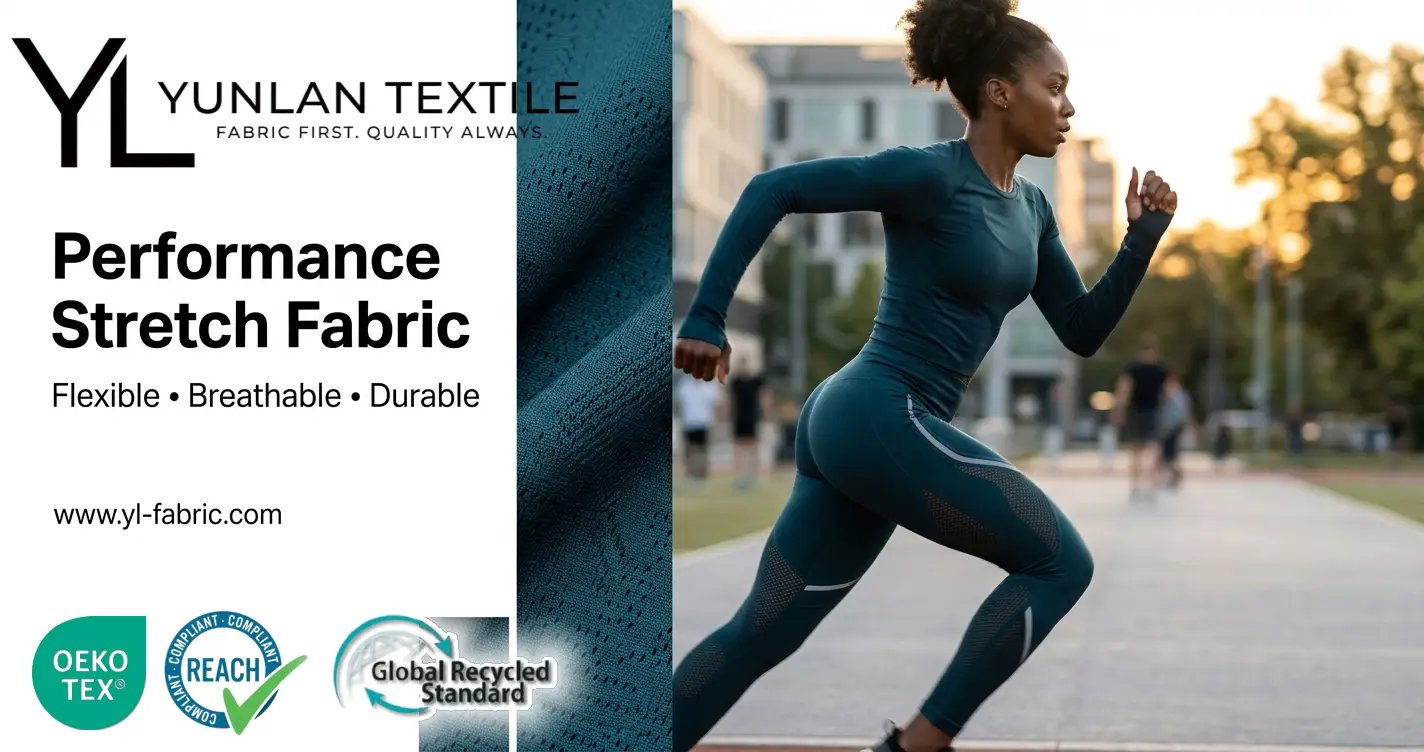
Stretch fabrics are designed to extend and return to their original shape, providing comfort, flexibility, and durability. 4-way stretch fabrics offer movement in all directions, while recovery determines how well the fabric returns after stretching.
TECHNICAL EXCHANGE
Julia W
4/27/20262 min read
What Is Stretch Fabric?
Stretch fabric is engineered to expand under force and recover its original shape after release.
It is widely used in apparel that requires flexibility, comfort, and performance.
Key Features:
Elasticity (stretch ability)
Recovery (shape retention)
Comfort in movement
Durability in repeated use
Explore our stretch and performance fabrics:
https://www.yl-fabric.com/products
Types of Stretch Fabrics
1. 2-Way Stretch Fabric
Stretch in one direction, typically weft stretch.
2. 4-Way Stretch Fabric
Stretch in both warp and weft directions, offering maximum flexibility.
👉 Commonly used in:
Sportswear
Activewear
Performance apparel
What Is Fabric Recovery?
Fabric recovery refers to how well a material returns to its original shape after being stretched.
Why It Matters:
Prevents fabric deformation
Maintains garment fit
Improves long-term durability
Poor recovery leads to bagging, sagging, and loss of structure.
4-Way Stretch Fabric for Sportswear
4-way stretch fabric is essential for modern sportswear due to its ability to move freely with the body.
Benefits:
Full range of motion
Improved comfort
Better fit and performance
Explore elastic fabrics for sportswear:
https://www.yl-fabric.com/products
How Stretch Fabrics Are Made
Stretch performance depends on both material and construction.
1. Fiber Composition
Elastane (Spandex)
Polyester stretch yarns
Nylon stretch yarns
2. Fabric Construction
Woven stretch structures
High-density weaving for durability
3. Finishing Process
Elastic recovery enhancement
Stability control treatments
Common Problems with Stretch Fabrics
Many buyers experience issues such as:
Fabric loses elasticity over time
Poor recovery after repeated use
Inconsistent performance from sample to bulk
Causes:
Low-quality yarn
Improper fabric construction
Weak finishing control
Our Solution
At YL Textile, we ensure consistent stretch performance through:
High-quality elastic yarn selection
Optimized fabric construction
Controlled finishing processes
Strict quality control from sample to bulk
We focus on both stretch and recovery—not just elasticity.
View our stretch fabric solutions:
https://www.yl-fabric.com/products
Applications of Stretch Fabrics
Stretch fabrics are widely used in:
Sportswear
Activewear
Outdoor apparel
Casual and fashion garments
They are essential for comfort-driven and performance-based clothing.
FAQ
What is 4-way stretch fabric?
It is a fabric that stretches in both warp and weft directions, allowing full movement and flexibility.
What is fabric recovery?
Recovery is the ability of a fabric to return to its original shape after stretching.
Why is recovery important in stretch fabrics?
Good recovery prevents sagging, maintains garment shape, and ensures long-term performance.
What is the best fabric for sportswear?
4-way stretch fabrics with good recovery and durability are ideal for sportswear.
Do stretch fabrics lose elasticity over time?
They can, especially if made with low-quality materials or poor finishing processes.
Address
Office Hours
YL Textile
No. 999 Xihuan 2nd Rd.,
Shengze Town, Wujiang Dist.,
Suzhou, Jiangsu, China
Postal Code: 215228
Contact
Mon - Fri: 09:00 - 22:00
Sun: Closed